
For People with Epilepsy

When medication isn’t enough, there is EASEE®
You have taken medications, adjusted dosages, and placed your hopes in new treatments. And still the seizures came. If this sounds familiar, you are not alone. Approximately one third of all people with epilepsy do not respond adequately to medication. This is known as drug-resistant epilepsy. This diagnosis is the point at which a more precise approach is needed — one that targets the origin of seizures directly, without intervening in the brain itself.
EASEE® was developed for exactly this purpose.

EASEE® Lead

EASEE® Power

EASEE® Access
Take the Self-Assessment
The self-assessment helps you quickly determine whether EASEE® may be a suitable therapy option for you and your epilepsy. It takes just a few minutes and provides an initial orientation.

A therapy that adapts to your life. Not the other way around.
Minimally invasive. And unnoticeable in daily life.
EASEE® is placed beneath the scalp in a short procedure — without any intervention in the brain. The stimulation for treating your epilepsy itself runs in the background: invisible, silent, and imperceptible. Your daily life remains in your hands.


Individually placed. Exactly where it is needed.
Every person, every epilepsy, every focus is different. The EASEE® electrode is therefore placed individually, directly above the area of the brain where your seizures originate.
For a therapy that is as individual as you are.
Your future Options remain open.
EASEE® is fully reversible. The system can be removed at any time, without leaving permanent changes or residual effects in the body. MRI scans also remain fully available, ensuring your diagnostic care stays uninterrupted.


Effective. Proven. Safe.
EASEE® is not just a new approach for epilepsy treatment — it has stood the test of time. In clinical studies, 65.4% of patients experienced a significant reduction in seizures after two years. That is almost two in three people for whom this therapy has brought real relief. 81% continued EASEE® therapy long-term — a quiet but clear signal: they feel the difference. This high therapy retention rate shows that most people who received EASEE® chose to stay with it — supported by a strong safety profile: no serious therapy-related adverse events were reported in the studies.
Numbers that represent real lives.
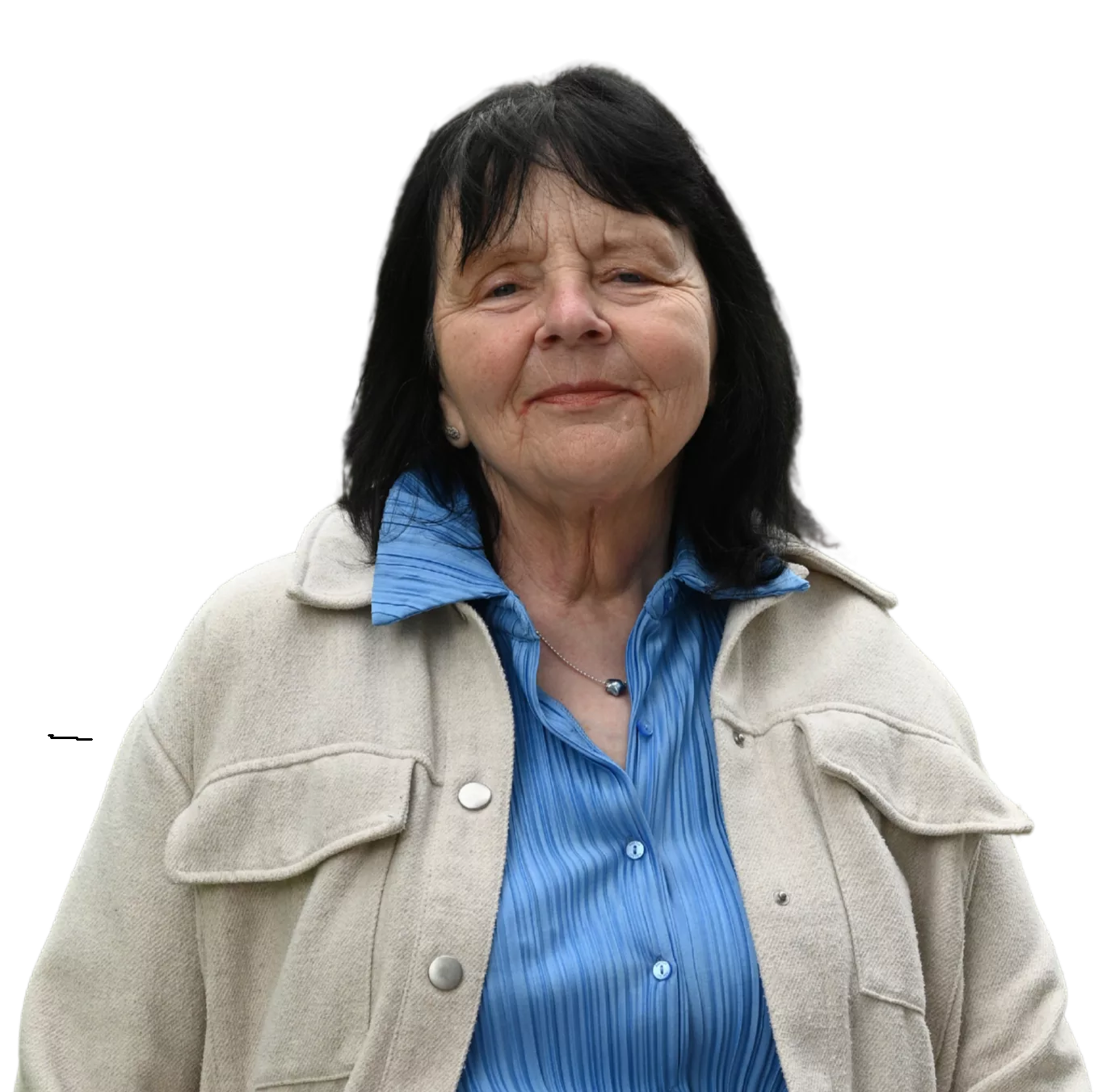
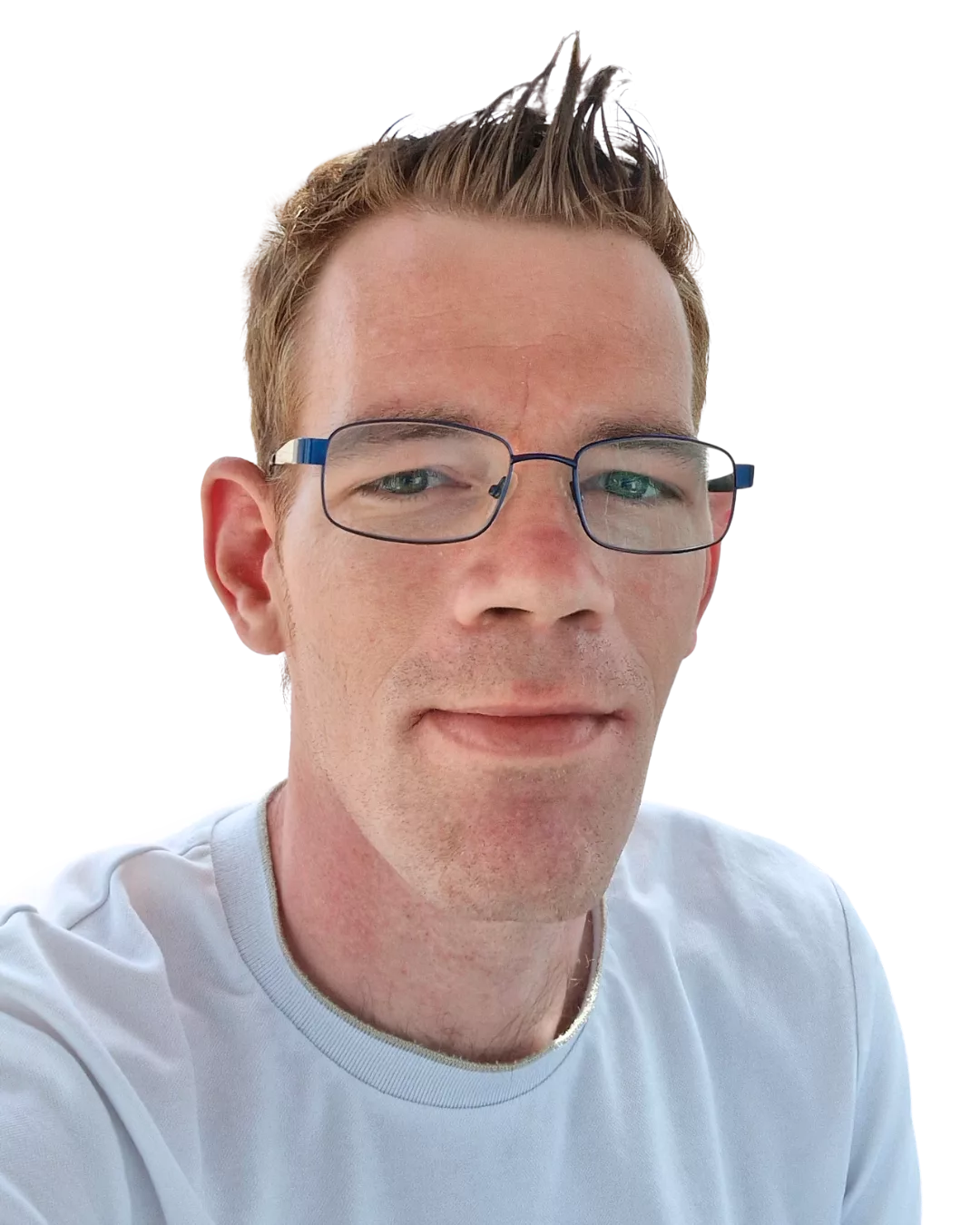
What Patients say


Take the Self-Assessment
The self-assessment helps you quickly determine whether EASEE® may be a suitable therapy option for you and your epilepsy. It takes just a few minutes and provides an initial orientation.
Videos

Ibrahims Life with EASEE®
Timestamps
- 00:09 Freedom means: going out alone, without help
- 00:24 up to 60 seizures — daily life severely restricted
- 00:30 Since EASEE®: no seizures for months
- 02:02 Dr. Glaser and Prof. Dr. Winter on their assessment, the importance of the patient-physician relationship, and the positive changes brought by EASEE® therapy
- 03:08 New goals: shaping your own future

Two Years after Implantation
Two years after the start of treatment, Ibrahim Soyudogan looks back — and his sister Nuriye and his brother Vakkas share how they experienced the changes as a family.
EASEE Talk

Episode 1 – What is Epilepsy?
What is epilepsy really — and why does a seizure often look different than expected? Dr. Elisabeth Kaufmann and Dr. Steffen Syrbe explain the basics, correct common misconceptions, and show how bystanders can respond appropriately.
1

Episode 2 – Diagnosis & Treatment Options
Why does an epilepsy diagnosis so often take so long — and what treatment options are available? Dr. Kaufmann and Dr. Syrbe explain typical hurdles, provide an overview of therapy options, and answer questions from the community.
2

Episode 3 – Living with Epilepsy
Sophie Morawetz and Ibrahim Soyudogan speak openly about living with epilepsy, the obstacles they have overcome, and what helped them regain confidence in everyday life — a look at real experiences and the courage to keep moving forward.
3

Episode 4 – Family members of people living with epilepsy
Nuriye as Ibrahim’s sister and Veronika as Sophie’s mother share what it really means to carry the weight of epilepsy as a family member — and what helps. Two honest perspectives on change, solidarity, and life alongside epilepsy.
4
Your Journey with EASEE®
Referral to the Epilepsy Center
Evaluation & Counseling on EASEE®
Surgery & Implantation
Activation
Follow-Up Care
Could EASEE® be right for me?
In 2–3 minutes, you can find out whether EASEE® could in principle be a suitable option for you and what next steps might make sense — with no obligation. The result does not replace medical advice, but gives you a helpful orientation before your next consultation.
FAQ: Frequently asked Questions
EASEE® stands for Epicranial Application of Stimulation Electrodes for Epilepsy. The name reflects the therapy’s unique approach: the electrode is placed under the scalp and on top of the skull, rather than inside the brain. This allows targeted stimulation of the area where seizures originate. But EASEE® also stands for something many people living with epilepsy hope for: an easier path forward in their epilepsy treatment journey
EASEE® stimulates the brain precisely via a thin electrode placed beneath the scalp — without touching the brain. The stimulation acts directly at the epileptic focus, reducing seizure frequency over the long term.
In clinical studies, EASEE® demonstrated a well-tolerated safety profile. No serious therapy-related adverse events were reported. As with any procedure, temporary discomfort at the implantation site or related to anaesthesia may occur.
Most patients are able to return home after 1–2 days. Wound healing typically takes a few weeks before the stimulation is activated.
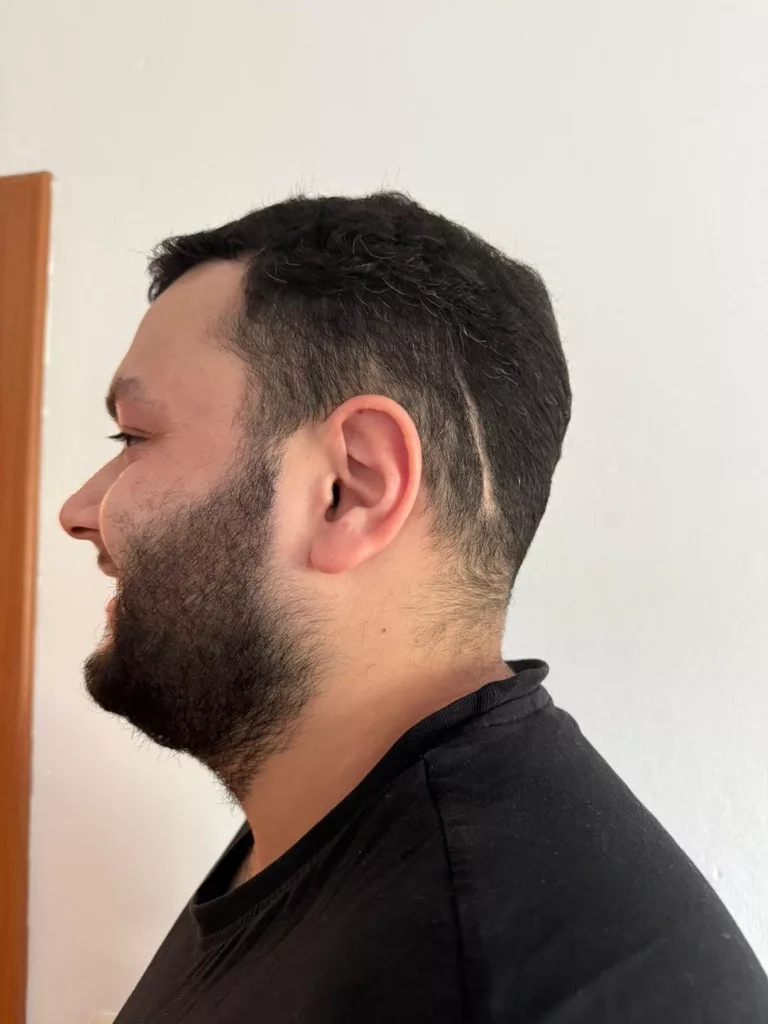
Only a small area of the scalp needs to be shaved for the implantation procedure—not the entire head. After healing, the scar is often largely concealed by the surrounding hair. How visible it remains depends on individual factors such as hair length, hair growth, and the body’s natural healing process. Many people are able to return to wearing their usual hairstyle once recovery is complete.
To help you get a realistic impression, EASEE® patient Ibrahim kindly shared a photo of his healed scar. The image shows how discreet the scar behind the ear can appear after the healing process. Please keep in mind that healing outcomes vary from person to person.
Activation takes place approximately four weeks after surgery. At this point, the therapy is individually adjusted for you.
EASEE® is generally suitable for adults with drug-resistant focal epilepsy. Whether it is the right option for you is determined together with a specialised epilepsy centre. Our self-assessment provides an initial orientation.
EASEE® is currently available for adults with drug-resistant focal epilepsy. At the same time, the therapy is being investigated in adolescents aged 12 to 17 years as part of a clinical study. The goal of this study is to evaluate the safety and effectiveness of EASEE® in younger people affected by epilepsy. By building on the positive experience gained in adults, researchers hope to better understand whether this treatment option may also benefit adolescents living with drug-resistant focal epilepsy. The first results are expected in 2027.
Latest from Instagram
Discover more from PRECISIS
PRECISIS GmbH, based in Heidelberg, develops bioelectronic therapies that target the very source of neurological diseases – the brain itself. Learn more about our technology, our team, and the vision behind EASEE® for epilepsy.
About PRECISIS
News
Product
Career